The journal
What is tempo for a workout? A clear definition and how to use it
Tempo is the speed of each phase of a rep, written as a four-part code. Learn how to read it, why it matters, and how to apply it with practical examples.
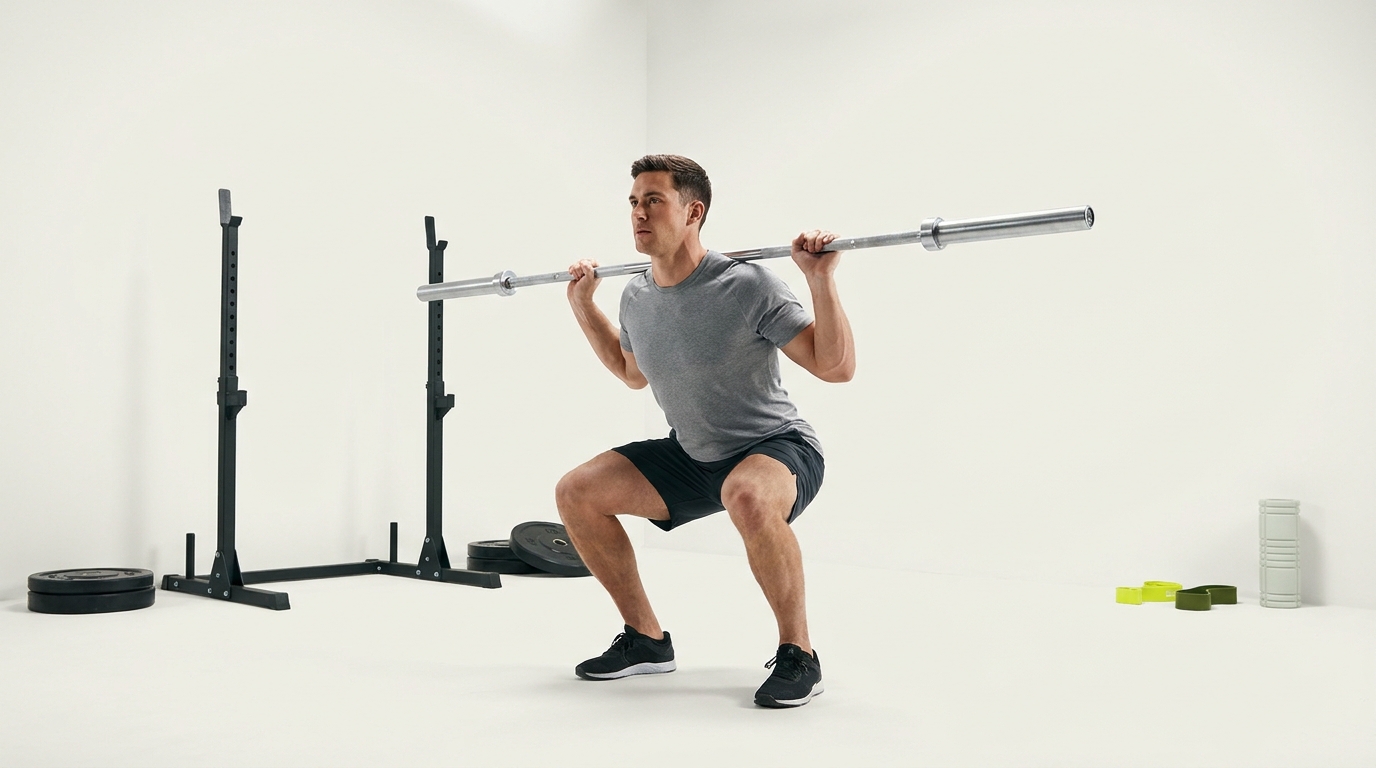
Tempo in strength training is the prescribed speed of each phase of a repetition, usually written as four characters that indicate: eccentric (lowering), pause at the bottom, concentric (lifting), and pause at the top. The digits are seconds; an X in the third position means lift with maximal intent to move fast rather than timing the concentric phase (NASM; OPEX Fitness).
How to read tempo notation
The order is fixed: 1) eccentric, 2) bottom pause, 3) concentric, 4) top pause. That order stays the same even if the lift starts with the concentric, like a deadlift (Priority Strength; OPEX Fitness).
- Example: 3-1-2-0 on a squat means 3 seconds down, 1 second pause at the bottom, 2 seconds up, no pause at the top (NASM).
- Example: 2-0-X-0 on a bench press means 2 seconds down, no bottom pause, explode up (X), no top pause (NASM).
- Letters may appear: X = explosive concentric; A can denote assisted work to overload the eccentric when you cannot perform the concentric (OPEX Fitness).
Why tempo matters
Tempo controls time under tension and the training effect of a set. Slower eccentrics and deliberate pauses increase time under tension and movement control; fast concentrics target rate of force development and power (NASM; OPEX Fitness).
- Eccentric focus: a slower lowering phase changes repetition duration and may help you practise control. It does not automatically make a given load or programme more effective.
- Pauses: A deliberate pause reduces the opportunity to bounce into the next phase and makes the intended position easier to observe (NASM).
- Concentric speed: Slower concentrics increase time under tension; an explosive concentric (X) emphasizes power intent and rate of force development (NASM).
A concrete example: squat vs deadlift at the same tempo
Program both lifts at 3-1-1-0.
- Back squat: 3 seconds lowering, 1-second bottom pause, 1 second up, no top pause.
- Deadlift: You still follow the same four-part order. Because the bar starts on the floor, you lift first for 1 second, take no top pause, lower for 3 seconds, and hold 1 second on the floor before the next rep (Priority Strength).
How to use tempo in programming
Match tempo to the exercise and the goal of your programme. If a slower cadence or added pause makes it hard to keep control, reduce the load or repetitions. Training experience alone does not prescribe one time-under-tension window for everyone. Ask the programme’s author if its notation differs from the convention here.
Examples of notation, not an individual training prescription:
- Controlled lowering: a squat at 3-1-2-0 takes six timed seconds per repetition, excluding transitions (NASM).
- Intent to move quickly: a bench press at 2-1-X-0 uses a controlled two-second lower, a one-second pause and an intentionally quick lift (NASM).
- Longer lowering phase: 5-0-1-0 describes five seconds lowering and one second lifting, without a deliberate pause at either end (NASM).
For broader context on pairing tempo with effort targets, see our explainer on how many RIR is best for hypertrophy, and for between-set timing see how long to rest between strength-training sets.
Common mistakes and simple fixes
- Rushing the lowering phase: If you unintentionally shorten the prescribed eccentric, the repetition no longer matches the written tempo. Use a metronome or audible count to hit the programmed seconds (NASM).
- Not adjusting load when you slow down: Longer eccentrics or added pauses typically require a reduced load to maintain form and hit the cadence. Plan on reducing load when you lengthen tempo prescriptions (NASM).
- Ignoring intent on X: The concentric may not look fast late in a set; what matters is maximal intent to move quickly when X is prescribed (NASM).
Count and keep your tempo every set
Tempo is a low-tech, high-leverage way to make your sets more intentional. Program it on purpose, count it honestly, and progress it alongside sets, reps and load (OPEX Fitness).