The journal
How much to increase dumbbell weight by
Choose dumbbell increases against your exercise, planned repetitions and control. Check the percentage change and whether the available increment still fits the plan.
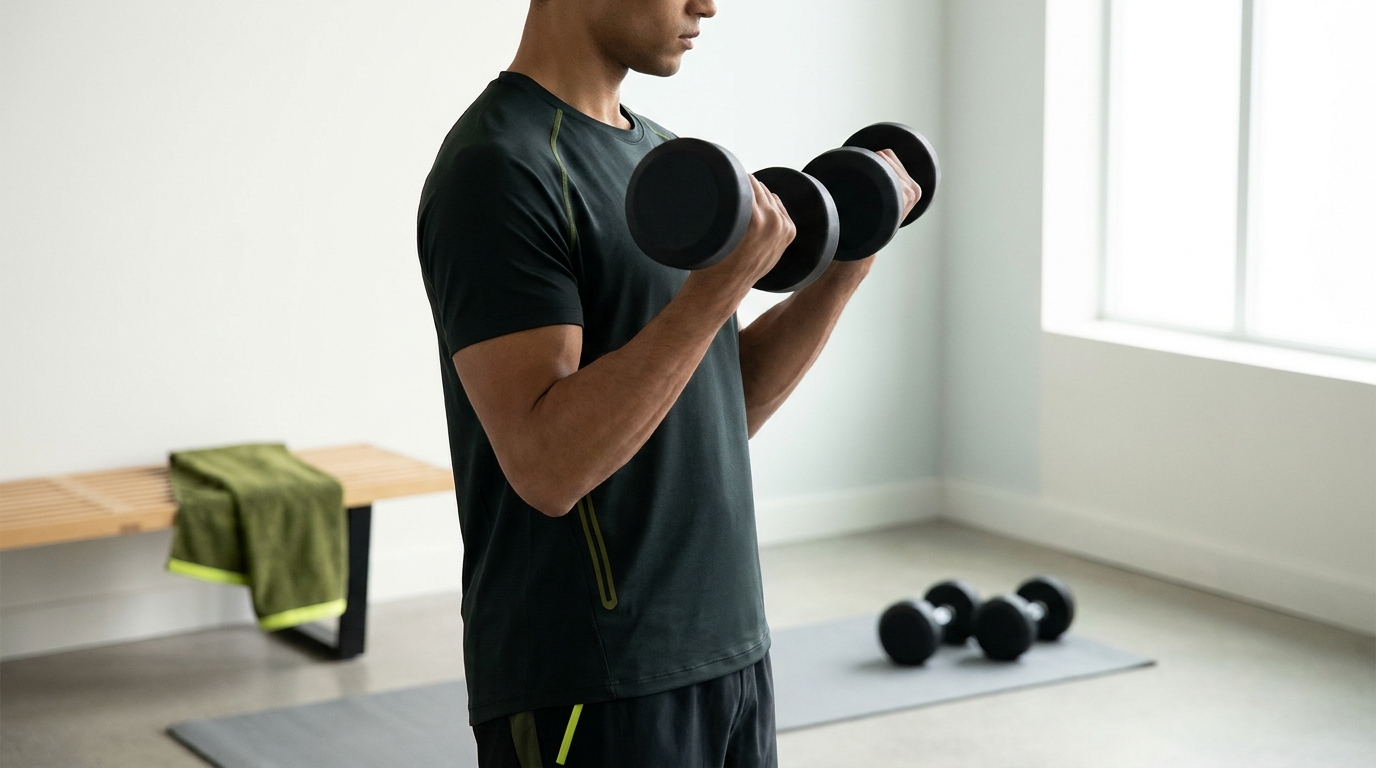
- Upper-body dumbbell exercises: add 2.5-5 lb per dumbbell.
- Lower-body dumbbell exercises: add 5-10 lb per dumbbell.
How to know you’re ready to increase
- You finish your sets with 1-3 reps in reserve (RIR) and clean technique, and you’ve hit the top of your intended rep range for two workouts in a row. That’s your cue to nudge the load up (two-for-two rule; MiniBeast).
- Typical hypertrophy sets land around 8-12 reps; REP’s coaching notes also emphasize starting light and adding small jumps as control improves (REP Fitness).
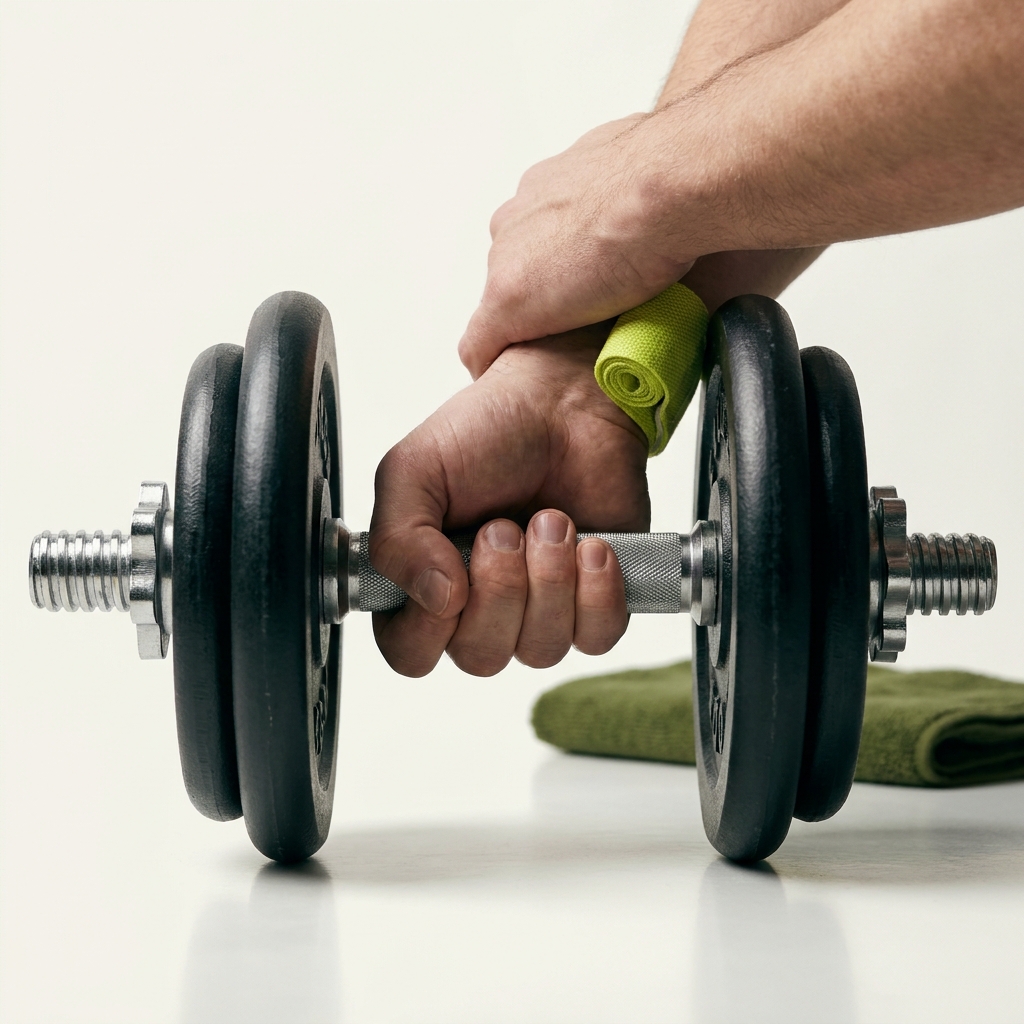
How much to add by exercise type
- Upper body (presses, rows, curls, raises): +2.5-5 lb per dumbbell when you can comfortably exceed your target reps twice while keeping form tight.
- Lower body (goblet squats, lunges, RDLs, split squats): +5-10 lb per dumbbell under the same condition.
- Isolation lifts (lateral raises, curls, triceps extensions): favor the smallest available jump.
If your gym only has 5 lb jumps
- Use double progression. First add reps within a target range (for example, work from 8 up to 12 reps), then increase weight and return to the lower end of the range. This keeps overload steady when increments are big (How to Move: What Weights to Buy and When to Increase; REP Fitness).
- Adjust set structure. Start a set with the heavier dumbbell for as many clean reps as you can, then drop to the lighter pair to finish the set with good form (a practical approach noted in How to Move).
- Manipulate tempo and control. Slower lowers and rock-solid pauses help keep the stimulus high if a 5 lb jump is too much for now (REP Fitness).
A quick example
Goal: 3 sets of 8-12 reps on a dumbbell shoulder press, finishing with ~1-2 RIR.- Week 1: 25 lb dumbbells for 12/12/12 reps with controlled form.
- Week 2: 25 lb for 12/12/12 reps again. In this hypothetical double-progression plan, you have met the top of the range across all sets twice.
- Week 3: Move to 27.5-30 lb (smallest available). Check that the new load still permits the planned minimum across the sets. If it does not, use a smaller increase or return to the previous weight.
When not to increase
- If technique breaks (cheating, momentum, joint discomfort), hold the weight or reduce it and rebuild clean reps first.
- If the heavier jump forces you far below your target reps across all sets, stay at the current load and add reps or sets until you’re back in range before trying again (How to Move).
Related reading from Rep & Range
- How to choose the right dumbbell weight for you
- How long does it take to see progressive overload? Practical timelines and a tracking plan
Put this into practice
Record the current load, sets, repetitions and the smallest available next step before increasing it. Decide from repeatable performance and control, not from a fixed increment that may not exist on your dumbbells.
Make-your-next-jump checklist

Quick FAQ
What if one side feels stronger? Start sets with the weaker arm/side and match reps on the stronger side. Keep the same dumbbell weight for both to even out over time (common practical approach in How to Move).
Optional equipment for this guide
This is a fixed 10 lb pair, not an adjustable set or a universal next increment. Compare with the actual weights and smallest usable step in your plan.
As an Amazon Associate I earn from qualifying purchases. These are researched options, not hands-on test results. Check the exact size or model, current price and availability on Amazon.
| Product option | Fit and limits to check | Retailer |
|---|---|---|
| Product imageCAP rubber-coated hex dumbbells, 10 lb pair | A pair of fixed-weight dumbbells for exercises suited to this load. Choose weight for your current ability; a single pair will not cover every exercise or progression. | View on Amazon |