The journal
How far can a resistance band stretch?
Use the limit for your exact resistance band. Learn what 300% elongation means in THERABAND’s guidance and why it is not a universal workout target.
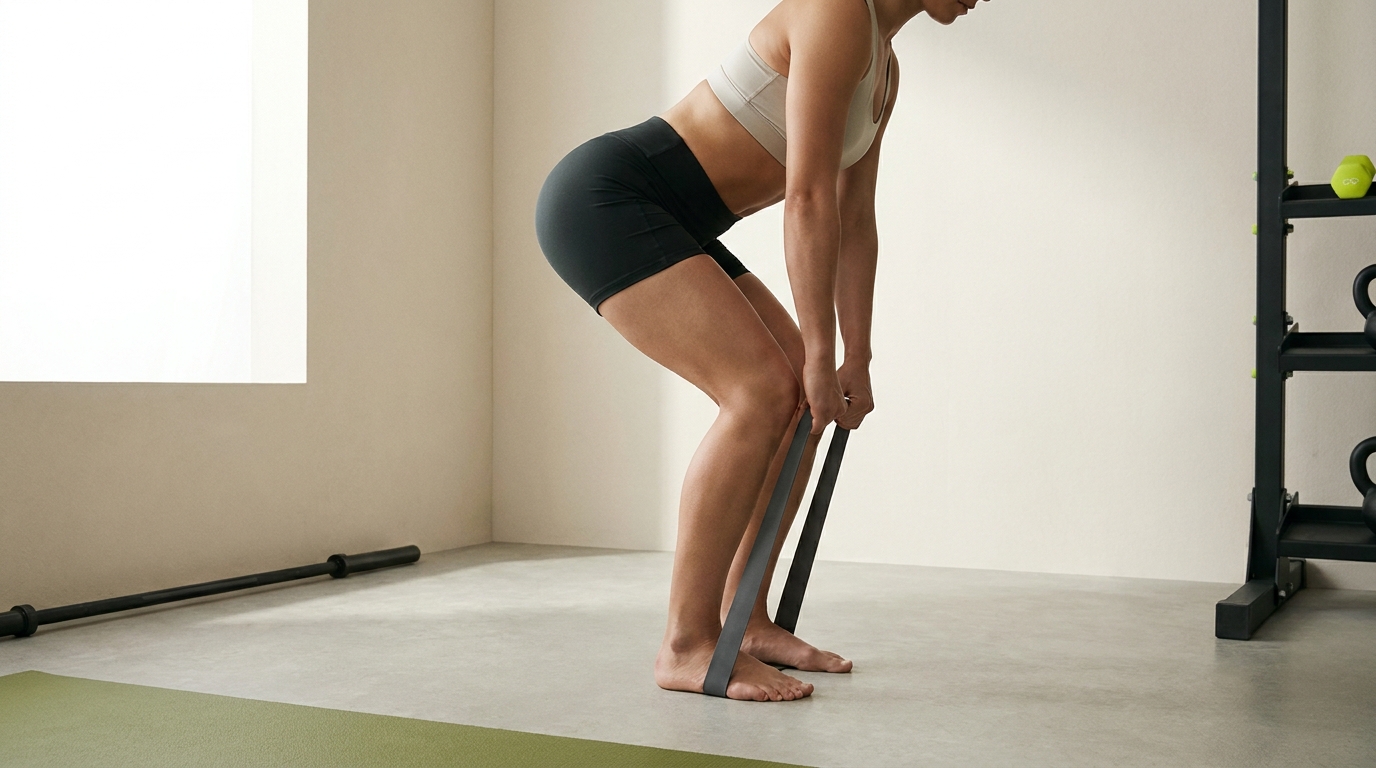
Follow the stretch limit for your exact resistance band. There is no single maximum established here for every flat band, tube and loop. As one manufacturer example, THERABAND CLX guidance says not to stretch that product beyond four times its resting length, described as 300% elongation. Do not transfer that limit to a different product.
What 300% elongation actually means
Elongation measures the increase above the unloaded length. If an unloaded segment is 20 cm long and becomes 40 cm long, it has gained 20 cm: that is 100% elongation, and a final length of twice the original. A final length of four times the original corresponds to a 300% increase.
This arithmetic explains the terminology. It does not prove that a damaged band, unsuitable anchor or uncontrolled exercise is safe. A manufacturer’s stated maximum is a boundary to respect, not an exercise target to approach.
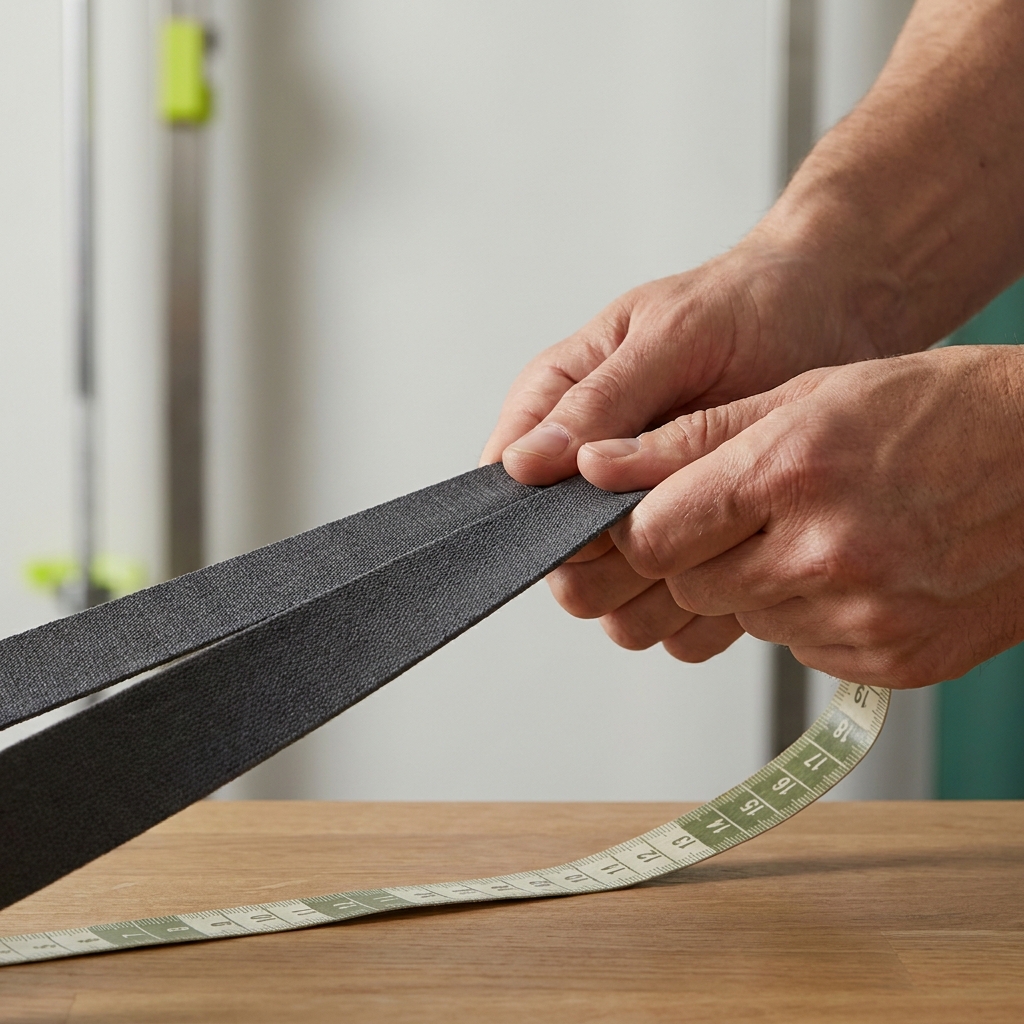
Measure the unloaded working segment
Identify the section that will be stretched between the grip or attachment points specified by the manufacturer. Measure its resting length with no tension applied. Do not call an already stretched starting position the resting length: that would overestimate how much further extension remains.
For CLX, the maker’s limit applies to individual loops as well as combined loops. A cut length, closed-loop circumference and handle-to-handle length are different measurements. If the instructions are unclear about which measurement to use, ask the maker rather than guessing a multiplier.
Check condition and setup before exercising
Performance Health’s THERABAND FAQ warns that small tears and over-extension can cause failure. Inspect the product and follow its instructions for replacement, eye protection, grip and attachment. Remove sharp jewellery that could damage the band where the maker advises it.
Choose a band and setup that allow the intended movement without reaching the stated limit. If the planned exercise requires too much extension or force, change to appropriate equipment or seek guidance on the setup. Do not shorten the working section or improvise an attachment just to make the exercise harder.

Put this into practice
Identify the exact band and its unloaded reference length before calculating stretch. Compare with that maker’s limit and inspection guidance; a percentage from another product is not a safe working limit for yours.
Check before stretching a resistance band
Does a lower stretch percentage guarantee safety?
No. Condition, grip, attachment, movement and product design still matter. Stop using equipment that is damaged or behaving unexpectedly. The purpose of checking elongation is to follow one part of the manufacturer’s instructions, not to certify the entire exercise.
For choosing the equipment, see our resistance-band inspection guide and use the exact model instructions alongside any general advice. The useful question is whether your specific band and setup suit the movement, not how far an unspecified band can possibly stretch.